Keep people in the decision.
Explore where AI can help and where human judgment, empathy, and accountability remain essential.
ON THE ROAD · FALL 2026
Follow the fall tour. Bring the conversation to your organization in 2027.
Bring Dr. Kelly Monahan and the Reclaim the Plot conversation to your 2027 conference, leadership gathering, or transformation initiative.
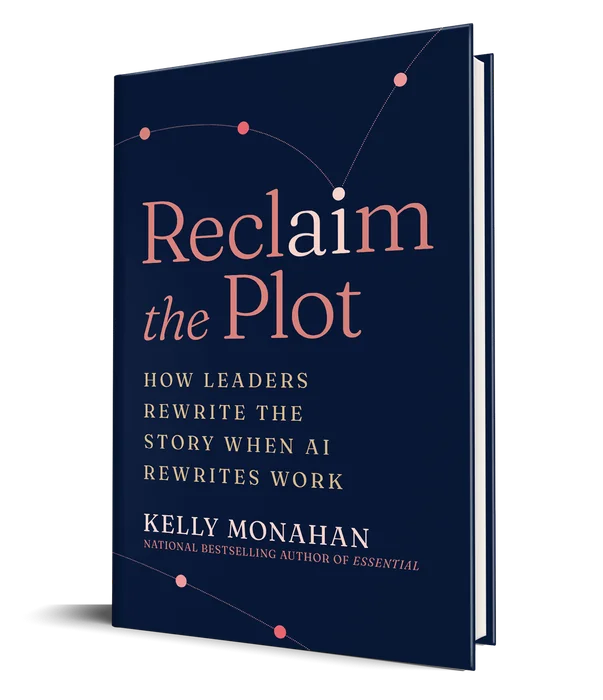 THE BOOK ARRIVES
One conversation: how do we redesign work for the AI era?
RESEARCH THAT REACHES THE ROOM
Dr. Kelly Monahan, co-founder of Beyond the Desk, previously led Future of Work at Meta and served as managing director of Upwork’s Future of Work Research Institute.
Reclaim the Plot introduces the ideas. Kelly’s keynote brings the conversation into the room. Beyond the Desk helps leaders redesign what comes next.
Explore where AI can help and where human judgment, empathy, and accountability remain essential.
Examine how everyday leadership choices build trust or get in its way.
Consider what changes when the people closest to the work help shape it.
UPDATES FROM THE FIELD
LATEST REFLECTION
After spending time with MetLife and their clients in Charleston, South Carolina, I keep thinking about all the things we say we don’t have time for.
Coaching someone on our team. Spending more time with a client. Having enough room in the day to think.
There is a lot of low-hanging fruit in leadership productivity. Think about how much time goes into sorting through an inbox, drafting logistical emails, or reading a long thread to figure out what needs attention. These are practical places to start using AI to get some time back.
I challenged the group to look for ways AI could free up 20–25% of their working time, starting with those everyday tasks.
Then came the question that stayed with me:
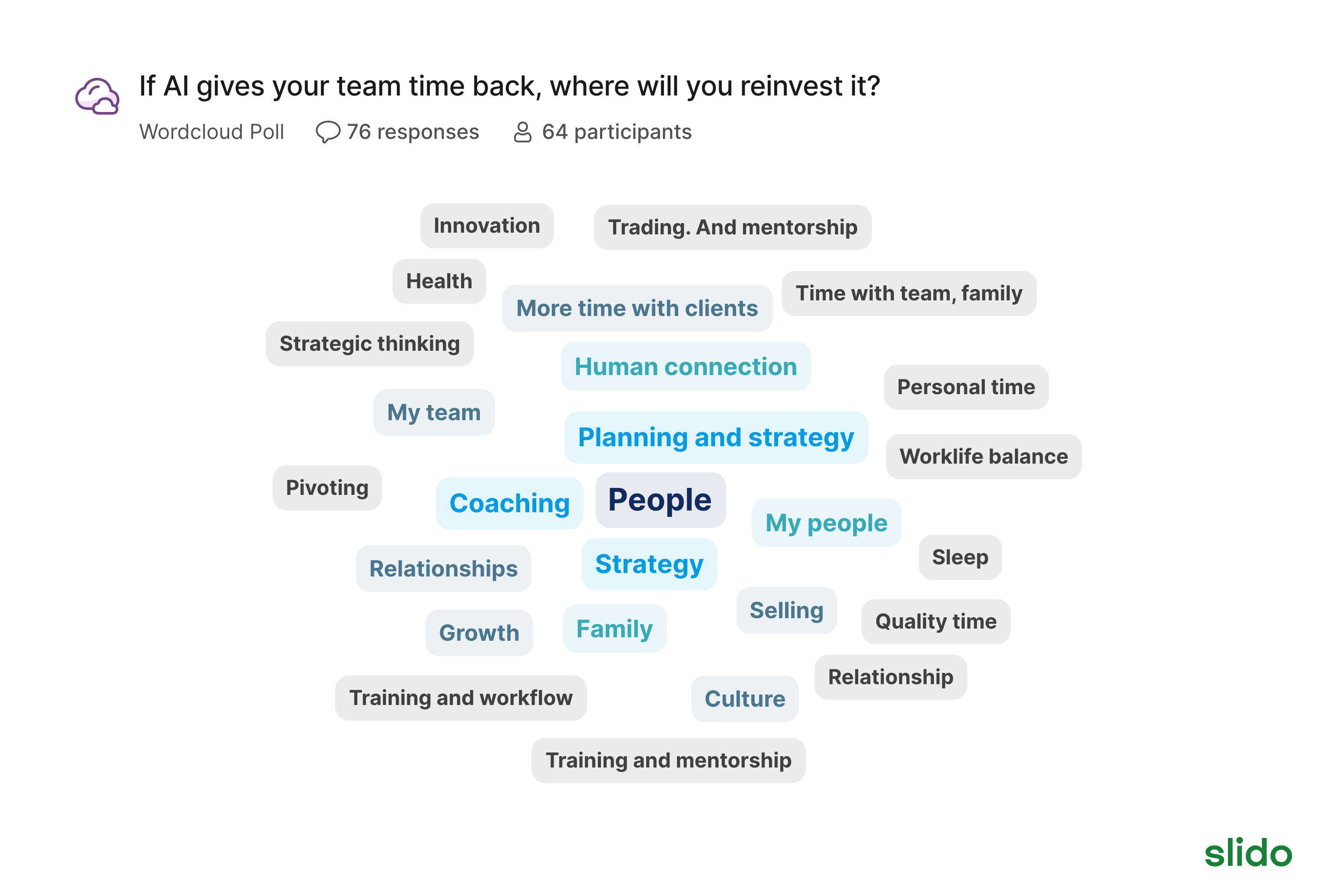
If AI gives your team time back, where will you reinvest it?
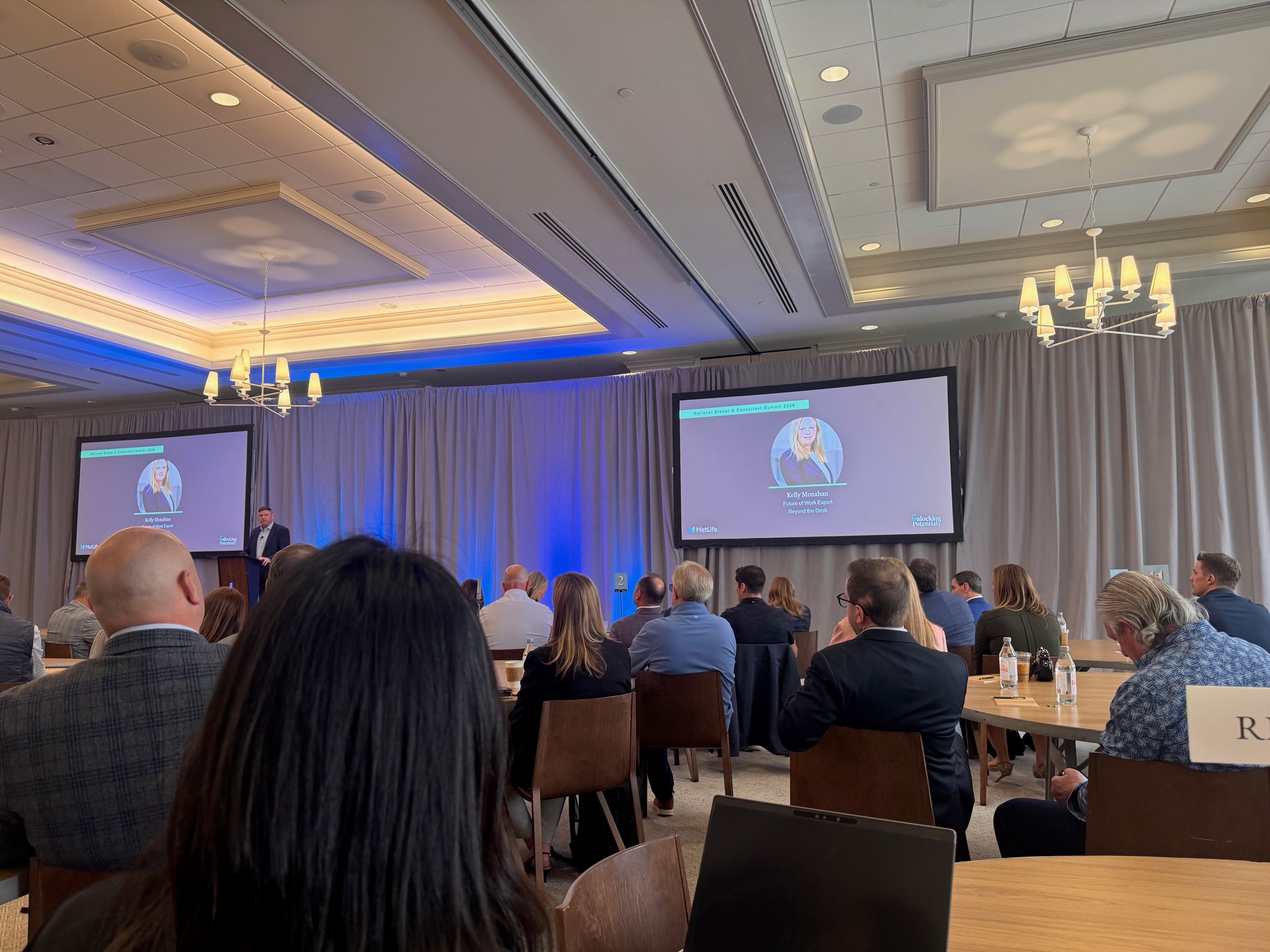
The responses included coaching, human connection, more time with clients, relationships, planning and strategy, and training and mentorship. There was room for family, health, and sleep, too.
What struck me was how much of that word cloud was about making time for people, including ourselves.
There is something very familiar about wanting to give someone your full attention while knowing how much work is still waiting for you. Those responses brought that tension into the conversation about AI.
We need more HUMAN time. This is what AI should help us make room for.
What I’m taking from Charleston is that we need to decide where that time will go while we’re finding ways to free it up. It would be so easy for it to disappear into another full calendar.
That gives us something concrete to try: pick one recurring task where AI could help, see what time it gives back, and put that time toward something you keep postponing. Maybe it’s a coaching conversation with someone on your team who could use your help.
Thank you to MetLife and everyone in the room for sharing what you would make time for. I’m grateful we had the space to talk about what we want AI to make possible in our lives.
What do you keep wishing you had more time for?
LATEST REFLECTION
A reflection on the principles that can guide organizational change.
How do you start designing a new plane while flying the old one?
That is the question I keep returning to after recent conversations with corporate leaders.
There is real ambition to work differently. Leaders want more agility, better experiences, and more room for people to contribute. At the same time, they remain accountable to planning cycles, performance measures, and organizational structures designed for an earlier way of working.
AI can help someone move faster through a task. The surrounding system may still require the same handoffs, approvals, and decisions. The person has a new capability. The organization has not necessarily created a new way to use it.
I have been asking a question in these conversations: what are your principles for AI adoption?
By principles, I mean commitments grounded in what the work is for and whom it should serve. They should help us make a decision today and remain useful when the next model can do considerably more.
One example I have been considering is this: AI should reduce friction in the customer journey. If it makes the experience harder for the person trying to get something done, we should question the deployment.
That is my illustrative principle. It is not a statement of any particular organization's policy.
A principle becomes useful when it changes a decision. If customers cannot get the help they need, do we alter the system? If an employee cannot resolve an exception, do we give them a way to act? If the measure looks better but the experience feels worse, which evidence gets our attention?
I am especially interested in work that depends on relationships: helping a customer, advising a client, maintaining trust, or representing an organization when the stakes are high.
As AI develops, more elements of those interactions may become technically possible to automate. We will still need to decide what we want the interaction to accomplish.
Sometimes the person seeking help needs information. Sometimes they need someone to understand why the answer so far has not helped. Sometimes being heard is part of reaching a useful outcome.
Efficiency matters. So does the value of a person staying with a problem until it is resolved. Our measures need enough room to recognize both.
I do not expect organizations to replace their entire operating model at once. I do think leaders can make the next experiment more thoughtful.
Choose a piece of work. Agree on the human outcome it should serve. Bring in the people who perform it, the people who depend on it, and the people who will support the technology. Decide what evidence would lead you to continue, change direction, or stop.
Then look beyond the individual task. Does a faster first draft create a larger review burden downstream? Does an automated response help the customer finish, or send them through another loop? Does the change give employees more room for judgment, and are they actually allowed to use it?
These are questions about organizational design. HR has an opportunity to help connect them to how we organize work, develop people, and recognize performance.
I left these conversations encouraged by the care leaders brought to the discussion. Values become most useful when they help people navigate an uncomfortable choice.
The question I would bring to your next team conversation is this: what should remain true about the way we treat people, no matter how good AI gets?
LATEST REFLECTION
A New York bookstore visit, a long-held dream, and the people who helped it happen.

In my twenties, I spent a lot of time in Barnes & Noble.
I was working through my doctoral program, reading, researching, and drinking plenty of coffee. I would spend time around the business and leadership shelves and imagine what it might feel like to write a book that belonged there.
It was a quiet kind of dream. One I carried through years of studying work, talking with leaders, and trying to understand why organizations so often struggle to make room for the people inside them.
On October 4, I walked into Barnes & Noble in New York and saw Reclaim the Plot on the shelves.
At Fifth Avenue. At Union Square.
I knew I would be excited. I was not prepared for how moving it would feel.
A finished book is such a tidy object. You can hold it in one hand. Its title and cover make it look as if it arrived fully formed.
For the person who wrote it, it carries the years of questions that came first. The research. The conversations. The moments of recognizing something in a workplace and trying to find language for it.
Standing in those stores brought me back to the version of myself who was still learning, still reading, and still wondering whether she would have something useful to contribute.
I wanted to tell her to keep going.
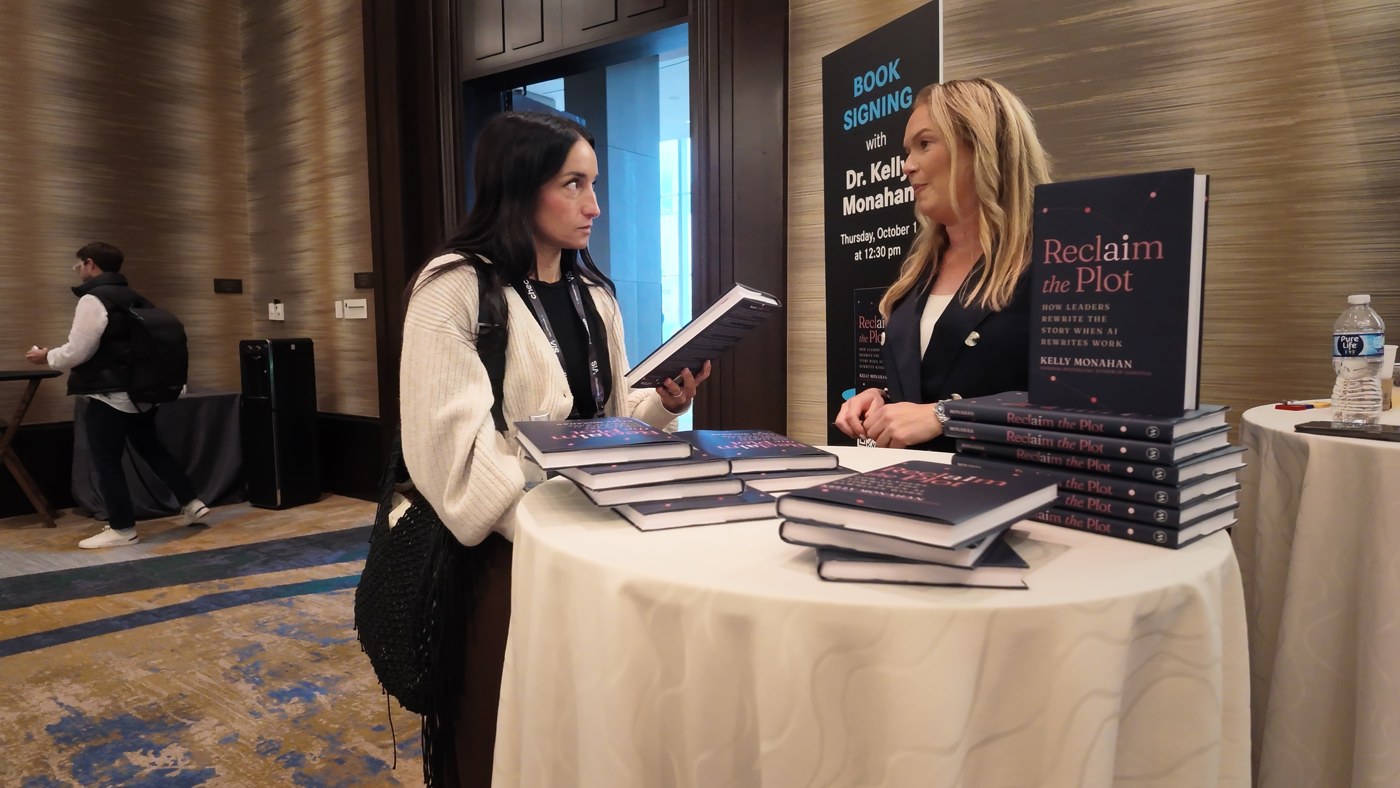
Kim Fazio was there with me. We took photos, signed copies, and had the chance to enjoy seeing the book in the world.
I am thankful to the teams at the Fifth Avenue and Union Square stores for making space for Reclaim the Plot, and for the opportunity to leave signed copies for readers to discover.
If you are nearby, you may find one. Availability can change, so please check with the store before making a special trip.
And thank you to Kim, and to the many people who have encouraged this work along the way. A book has an author's name on its cover. Getting it into the world takes a community.
The best part of this launch has been seeing the ideas meet people in their own lives. A question about a child's future. A concern about a team. A reader recognizing a situation they have been trying to understand.
My hope is that Reclaim the Plot gives those experiences a little more language, and gives readers a place to begin a conversation.
This field note is a moment to be grateful. For the shelves I used to browse. For the chance to add something to them. And for everyone who might pick up the book and make the next part of the conversation their own.
LATEST REFLECTION
Reflections from SIA's CollaborationX on experience, opportunity, and redesigning work.
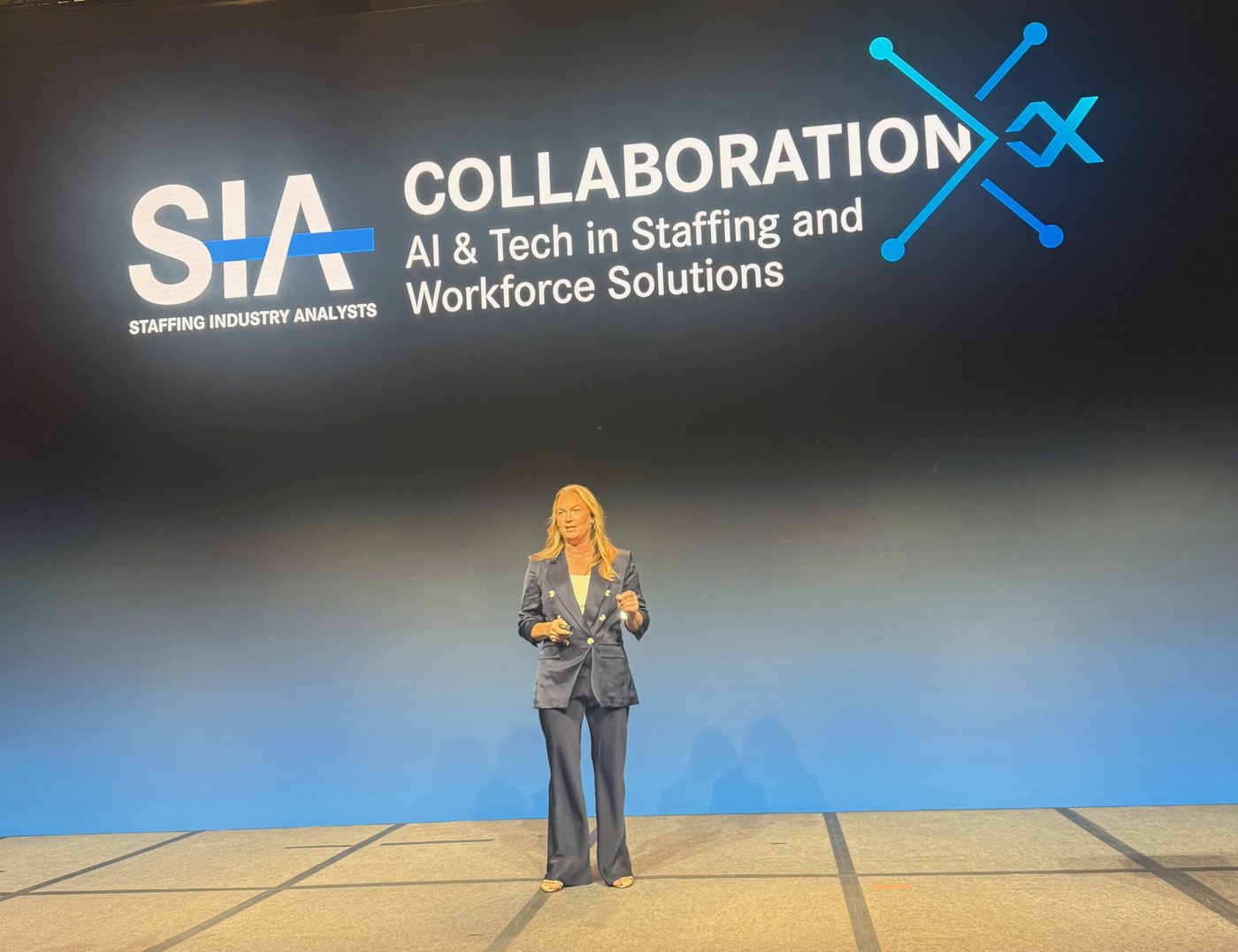
I left SIA's CollaborationX thinking about the first chance someone gets.
A project. A client. A manager willing to explain why an answer is incomplete. Work that is small enough to learn from and real enough that the outcome matters.
Those experiences help us become capable professionals. They give us something to draw on when a situation is ambiguous and there is no perfect answer.
As AI changes how work gets done, I worry about how deliberately we are protecting opportunities to build that experience.
Early in a career, preparing a first draft, checking information, or working through a customer request can teach more than the task description suggests. You begin to recognize what good work looks like. You discover the questions you did not know to ask.
If AI does more of the first attempt, we need to think about how newcomers will still develop the understanding required to evaluate it.
This is a work-design question, even where we cannot confidently attribute a change in hiring to AI. The wider labor market is shaped by many forces. We should be careful about treating every difficult job search as evidence of technological displacement.
The practical responsibility remains: give people a way to learn the work well enough to exercise judgment over it.
At CollaborationX, I was encouraged by the discussion of the contingent workforce. Project-based work can offer exposure to different organizations, problems, and expectations. It can also help someone learn how to scope a project, communicate with a client, and take responsibility for an outcome.
Those are valuable entrepreneurial skills, whether someone eventually chooses independent work, consulting, or a full-time role.
But access to a project is only the beginning. A newcomer also needs a clear brief, reasonable expectations, useful feedback, and someone they can turn to when they do not yet know what to do. We should not assume that placing responsibility on a young worker automatically creates development.
The opportunity is to design those conditions into the work.
Imagine a small project where a new professional uses AI to develop an initial approach. Before delivery, they explain their reasoning to an experienced colleague: what they accepted, what they changed, what they checked, and where they remain uncertain.
The review becomes a place to develop judgment. The colleague can see how the person is thinking. The newcomer gets feedback on the choices behind the output.
That is an example of a work arrangement we could design intentionally. It would require time from experienced people, and that time would need to count as valuable work too.
I have a great deal of hope for Gen Z. They are entering organizations built around familiar ways of working while also helping discover what new ways might look like. That is a difficult position to be in.
What encouraged me in the room was the empathy and desire to get this right. The discussion recognized that the future of talent depends on the opportunities we create, not only on the tools we adopt.
Thank you to SIA and everyone who joined the conversation at CollaborationX. I left with a question I hope we keep asking: what real opportunity to develop judgment are we giving someone who is just getting started?
LATEST REFLECTION
What I’m hearing on the road: making room for tomorrow while remaining accountable for today.
How do we build a new way of working while keeping the current one running?
It is a question I am carrying with me as I meet with leaders on the road. There is ambition to work differently, alongside a responsibility to keep delivering for the people who depend on the organization today.
We ask people to experiment while meeting this quarter’s commitments. To learn new approaches while remaining accountable to familiar measures. To rethink a process while customers and colleagues still need it to work.
AI makes that tension more immediate. A team can gain a new capability quickly. Finding the time, changing the handoffs, and building confidence in a different way of working can take longer. Leaders have to make room for that transition.
The current way of working carries real commitments. Customers expect help. Colleagues depend on reliable information. People need to know who is responsible when something goes wrong. Maintaining those commitments is valuable work.
I would begin by naming the outcomes that must remain dependable during a change. Then separate those outcomes from the routines we currently use to deliver them. A customer may need a reliable answer; that does not mean every existing approval or handoff must remain forever.
That distinction gives an experiment a useful boundary: what are we free to change, and what must people still be able to count on?
Where will the time, capacity, and permission to build something different come from? That is a leadership decision. If every hour is already committed, an invitation to experiment becomes another demand on the same people.
For one bounded experiment, leaders can identify what will be paused, simplified, or reassigned. They can protect time for the people testing the approach and the colleagues who will review and support it.
The people maintaining the current operation need recognition too. If we celebrate only the new initiative, we can overlook the work that makes it possible to keep serving people while we learn.
Consider a team testing AI to prepare an initial response to a customer request. The experiment might begin with a limited set of cases, a named reviewer, and a clear route back to the existing process. This is an illustrative example of how a transition could be designed.
Speed would be one thing to examine. I would also want to know whether customers get useful answers, whether reviewers can catch mistakes, and whether the change creates extra work elsewhere.
Agree in advance on the evidence that would justify expanding the approach, changing it, or stopping. Give the people doing the work a way to report what is happening, and the authority to pause when the agreed boundaries are crossed. Learning needs a path into the next decision.
Running two approaches for a time may be necessary. Keeping both indefinitely can leave people carrying two sets of responsibilities, with no clear agreement about which one counts.
A successful experiment needs a transition decision: what can we retire, who needs support, and who is accountable for the new way of working? The answer may include different training, measures, handoffs, or decision rights.
Until those surrounding conditions change, the new approach can remain extra work layered onto the old. Leaders need to decide what will come off the team’s plate as confidence grows.
Choose one change your team is already trying to make. What must remain dependable? What capacity have you made available? What evidence will help you decide whether the new approach is ready? And what will you stop doing if it succeeds?
I want to keep returning to this tension as the road conversations continue. Building a new way of working means making deliberate choices about how we move from the work people rely on today to the work we want to make possible tomorrow.
LATEST REFLECTION
Four PLOT questions leaders can use to make decision rights, expertise, and accountability explicit.

Walking into 30 Rock felt surreal. On October 5, I joined NBC News live to talk about AI and the agency we have as it becomes part of our lives.
The conversation was a reminder that people need a place to begin. You do not need to understand every technical detail of an AI system to ask what it is doing, whose expertise matters, or who is responsible for the result.
For those of us leading teams and organizations, those questions carry an additional responsibility. Our choices help determine whether other people have a meaningful say in how their work changes.
This is the leadership reflection I carried away from that visit. The workplace examples below extend the PLOT questions into team decisions; they are not a transcript of the broadcast.
An AI-assisted workflow can change who influences a decision before anyone formally changes the decision rights. A summary can determine what gets discussed. A recommendation can narrow the options a manager considers. A draft can become the default simply because it already exists.
Leaders can make those choices visible. In one workflow, name what AI is helping with, where its output enters a decision, and which decisions require human judgment. Then ask whether people have the time, information, and authority to disagree with the output. A human review step matters only if someone can actually exercise it.
The people who understand a process are not always the people choosing its new tools. Someone doing the work may know why an apparent exception exists, which relationship makes a handoff possible, or what gets lost when a complicated situation becomes a neat summary.
Bring that knowledge into the design early. For a proposed AI-assisted customer response, for example, frontline colleagues can help identify which cases need a conversation, what context is routinely missing, and when a response should be escalated. Their expertise can shape both the workflow and the definition of success.
When several people and systems contribute to an output, responsibility can become difficult to locate. Who reviews it? Who can pause the process? Who responds when someone challenges the result?
Those answers should be clear before the work reaches a customer, colleague, or decision-maker. Name the person accountable for the outcome and make sure that person has the authority and support to fulfill that responsibility. Accountability becomes difficult to sustain when someone is expected to sign off on work they cannot meaningfully inspect.
A polished answer can travel quickly through an organization. Leaders can help teams establish what must be checked before that answer becomes the basis for action.
The checks should reflect the consequences of being wrong. A first draft of an internal agenda and an analysis supporting a consequential staffing decision need different levels of scrutiny. Identify the claims, assumptions, and missing context that matter. Agree on the evidence needed, who will check it, and what happens when uncertainty remains.
Choose one workflow where your team already uses AI. Ask everyone involved to answer the four PLOT questions independently, then compare their answers.
Where do people disagree about what AI is deciding? Whose expertise has been missing? Is the person who owns the outcome able to review and challenge the work? What does the team assume someone else is checking?
Choose one gap to address. Make a decision right clearer, bring an overlooked colleague into the process, or establish a review that people have time to perform. Return to the workflow and see whether the change helps.
I left NBC grateful for the chance to bring these questions into a wider conversation. For leaders, keeping our agency also means creating conditions in which the people around us can use theirs.
LATEST REFLECTION
Do you ever have those days when everything seems to go wrong?
Yep. The night before my book launch was one of those.
My dog, who has been healthy for all five years of his life, needed his first trip to the emergency vet just hours before my flight. Leaving is hard enough. Leaving when you’re worried about someone you love is something else.
Then, just after our plane landed, we had to take off again because something was on the runway. A first for me. And not a first I was looking for that night.
I’m sharing this because, as I prepare to take the stage this week and talk about AI and the future of work, this is the life happening behind the scenes.
And I know everyone in the room will have their own version.
A sick pet. A parent who needs care. A disrupted trip. Something unexpected that has already used up the energy they thought they had for the day.
We talk about AI transformation as if it’s happening in a world with plenty of room for change. But this messy middle is unfolding alongside everything else: ordinary worries, stretched people, and systems that feel increasingly strained.
AI is going to change so much, slowly, and then all at once. But life isn’t going to pause while we figure it out.
That makes having a say in how AI shapes our work and lives more urgent. It also makes community essential. We need places to ask questions, share what we’re learning, and admit when we’re overwhelmed. We need people who can help us carry what comes next.
This is not a solo leadership journey.
So I’m heading into tomorrow’s book launch excited, worried about my dog, a little rattled, and deeply grateful for the village around me. The people caring for him while I’m away. The people checking in. The people helping bring this book into the world.
Before I even step on stage, they’re reminding me what this work is about: we move forward together.
Very human. Like the work ahead.
LATEST REFLECTION
I gave a room of leaders a choice I wouldn’t want to make.
Accelerate AI adoption and pursue growth, knowing that early-career learning opportunities could disappear. Or slow adoption to preserve those opportunities, knowing that delay carries costs too.
The room appeared split down the middle.
Neither side had an easy answer. Each was protecting something the other choice put at risk.

That tension had been showing up in conversations throughout the day. A parent wondering what their high schooler should study. Leaders asking how universities can prepare students for work that is changing beneath them. Communities trying to welcome investment while protecting the places people love.
These questions stayed with me because they make the transition personal. “The future of work” is someone’s child choosing a path. It is someone’s hometown deciding what growth should look like.
And this is why leadership is so damn hard right now.
We can describe the promise of AI. We still have to take responsibility for how people get there.
We are in a messy middle. Organizations built before AI are trying to become something new, while the people inside them still need to learn, earn a living, and find their place. The transition is full of decisions where worthwhile things compete.
Early-career work makes the stakes painfully clear. The task we automate today may also be how someone learns to exercise judgment tomorrow. If the task disappears, who is responsible for creating another way to learn?
When we discussed the PLOT framework, the O (Ownership) drew particular attention: who actually owns the outcomes? People, technology, risk, and workflows are connected. Yet responsibility can fall into the gaps between departments, institutions, and generations.
Owning that transition asks more of a leader than choosing a tool. It means returning to first principles: what is this work for, and what must it help people become? It means seeing the whole system, including the second and third consequences of a decision that looks efficient today.
It is not lost on me that we are asking leaders to build the future while remaining responsible for the people making the transition.
Boise, Idaho, it was a pleasure to wrestle with these questions alongside your business leaders, public officials, and nonprofit leaders today. I left thinking about the care people brought to the conversation, for their children, their communities, and the future they want to help build.
I’m humbled to have been part of it. And I’m carrying your questions with me as this tour continues.
LATEST REFLECTION
The most urgent questions are not about what AI can do. They are about what happens to people when work changes faster than confidence can catch up.
In a recent room of experienced leaders, thoughtful questions during the conversation and in the exchanges afterward made that tension impossible to miss.
These themes combine audience questions and are paraphrased to protect participants’ privacy.
What if I don’t want to change? We’ve already been through so much.
What happens to people who don’t want to change or don’t know how to make it through this transformation?
Do we need to slow down AI development?
What will the future workforce look like, and where do I even begin?
WHAT I’M LEARNING
Resistance is often accumulated fatigue, not a failure of imagination.
People need a bridge from disruption to agency before they can absorb the promise of a new tool.
Experience is not obsolete. Tool fluency matters, but so do context, consequences, relationships, and judgment.
THE CONVERSATION IS MOVING
14 events. 11 cities. From Chicago to Washington, DC, the Reclaim the Plot tour brings a shared question into conferences, leadership gatherings, and organizations: how do we redesign work for the AI era?
Four highlights from the itinerary. View every event or choose a month.
Dates are shown for all confirmed stops. Private client names remain confidential. Attendance is arranged with each organizer. Itinerary checked September 19, 2026; dates may change.
 RESEARCHER. AUTHOR.
MEET YOUR GUIDE
Research that challenges the playbook.
Stories that stay with you.
The keynote starts the conversation. Beyond the Desk helps leaders redesign what comes next through the New Leadership Blueprint Lab, advisory, and coaching.
“Kelly Monahan captures, with uncommon clarity, how organizations drift into failure—and how they can find their way back.”General (Retired) Stanley McChrystal
From his endorsement of Reclaim the Plot
LET’S TALK ABOUT 2027
Kelly is now planning select 2027 keynotes, leadership gatherings, and Beyond the Desk engagements. Share what your team is facing and what you’d like to explore.
Your inquiry goes to the Beyond the Desk team to discuss fit, timing, and next steps. A date or finished brief isn’t required to start.
Bring the questions in Reclaim the Plot to your conference or team. Explore AI and human judgment, the conditions for trust, and new approaches to work.
Continue the work through the New Leadership Blueprint Lab, advisory, or coaching with Beyond the Desk.
For an interview or podcast, choose Press in the form. For group books, include your quantity and event date if known.

A few details are enough, whether you’re exploring a keynote, leadership gathering, Blueprint Lab, advisory, or coaching. No confirmed date or finished brief needed.
You can also contact the Beyond the Desk team.